1031 Exchange Fort Worth
Fort Worth commercial real estate

city

FORT WORTH

1031 EXCHANGE

Fort Worth, TX serves as a strategic hub for 1031 exchange investors seeking to defer capital gains taxes while transitioning between investment properties. As the 13th largest city in the United States with a population exceeding 900,000, Fort Worth offers diverse commercial real estate opportunities across industrial, retail, office, and mixed-use sectors. The city's robust economy, anchored by major employers including Lockheed Martin, American Airlines, and BNSF Railway, drives consistent demand for commercial properties suitable for 1031 exchanges.

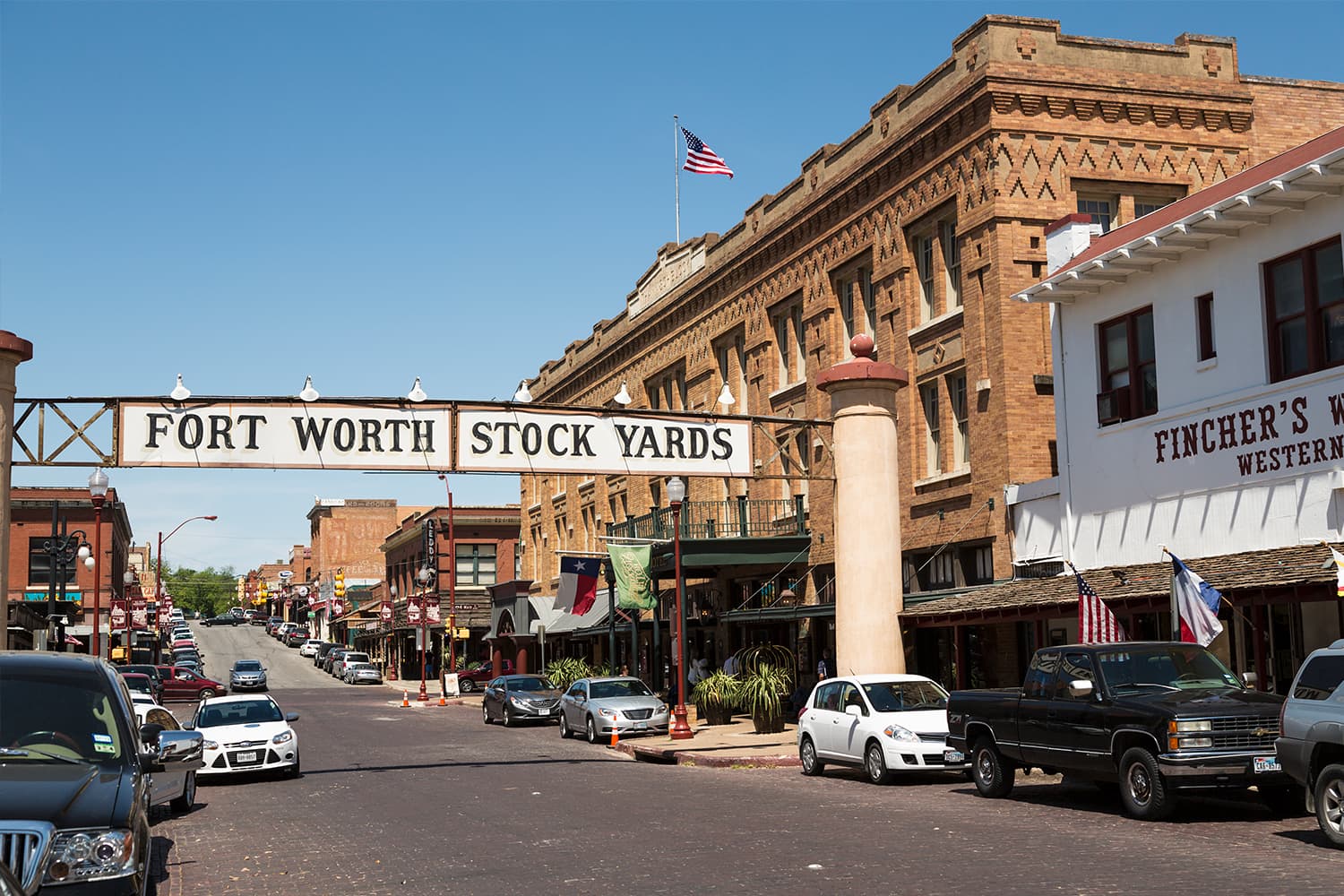
Investors relocating from Fort Worth, TX benefit from our nationwide property identification network, which extends beyond local markets to identify replacement properties across all 50 states. Whether you're selling a downtown office building, industrial warehouse, or retail strip center in Fort Worth, our team facilitates compliant exchanges by identifying qualified replacement properties that meet IRS like-kind requirements. The city's growing population, expanding business districts including the Stockyards District and Cultural District, and favorable tax environment make Fort Worth an attractive market for both relinquished and replacement property transactions.

Our comprehensive approach includes qualified intermediary services, property identification support, and exchange documentation to ensure full IRS compliance. We work with investors throughout Fort Worth and provide nationwide property identification to help you find replacement properties that align with your investment objectives while maintaining tax deferral benefits.
FORT WORTH MARKET NOTES

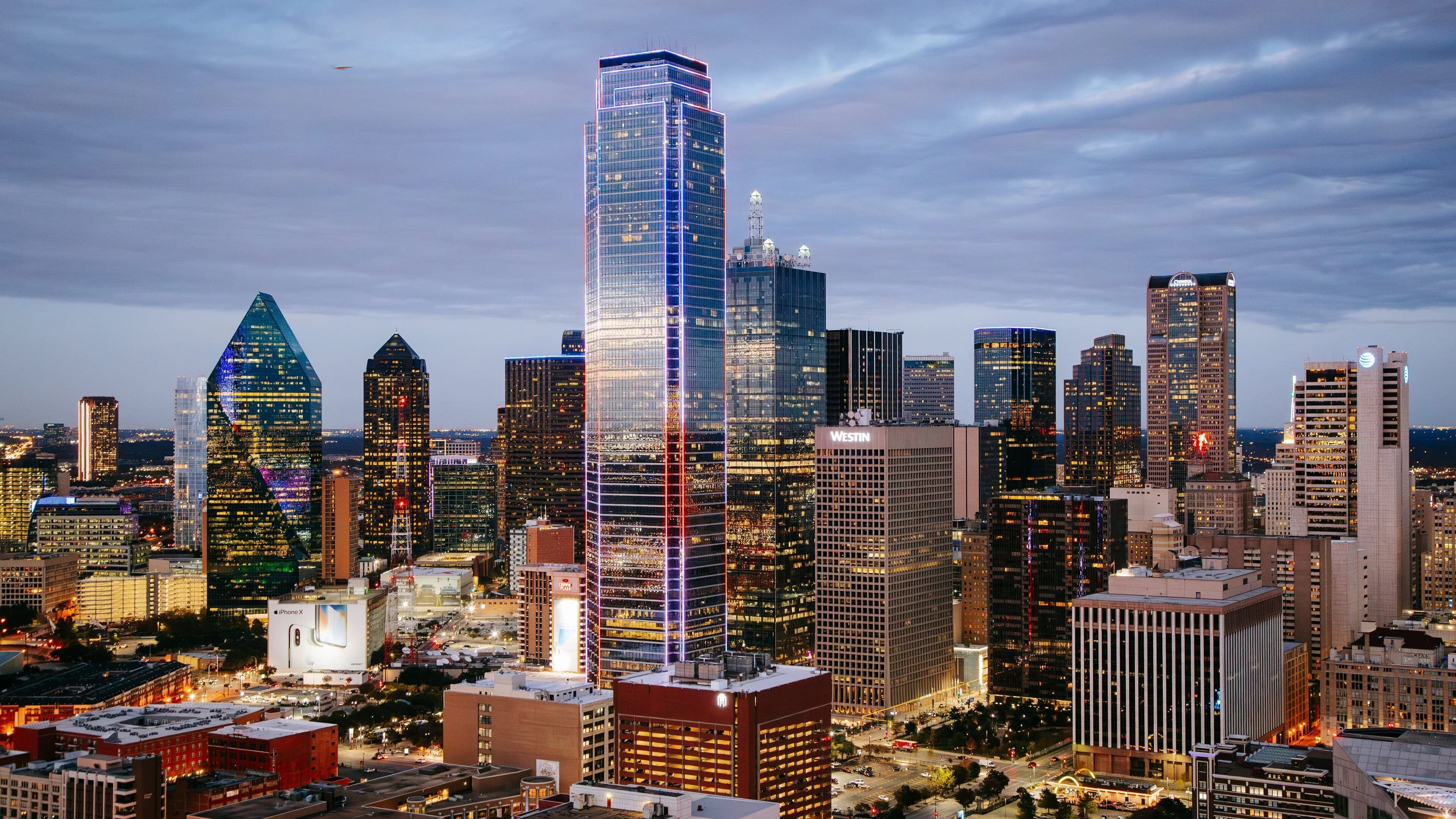
Fort Worth is not one commercial market wearing a single name, it is at least four. Downtown's Class A office towers and historic warehouse conversions sit inside the bend of the Trinity River. Sundance Square, a few blocks over, is a restored entertainment district managed almost entirely as one asset. West of downtown, the Cultural District and West 7th corridor mix museum-adjacent multifamily with event-driven retail tied to Dickies Arena. And out along I-35W near Fort Worth Alliance Airport, AllianceTexas is a rail- and air-cargo-served industrial zone that behaves more like a national logistics hub than a piece of the local Fort Worth market. An exchanger who prices all four the same way, or assembles one generic diligence file for whichever happens to be on the identification list, is working from the wrong map.

Downtown's Office Towers and Warehouse Conversions Are Two Different Records

Legacy Class A and B office towers near the Tarrant County courthouse corridor were built for law firms, banks, and professional services, and their exchange file leans on tenant estoppels and a current rent roll. A converted early-twentieth-century warehouse like the Texas and Pacific Warehouse, now residential or mixed use, carries a different record: a certificate of occupancy reflecting the conversion rather than the original industrial use, plus any recorded covenants tied to review by the city's Historic and Cultural Landmarks Commission. Treating the two as interchangeable because both sit downtown is a documentation error, and a downtown title commitment should list every easement, restrictive covenant, and historic-designation instrument by document number, since Tarrant County's chain of title on older downtown parcels can run through transfers where an earlier covenant was never formally released. A share of downtown's office space also carries government leases to Tarrant County or City of Fort Worth departments, which typically use assignment and termination language different from a standard commercial lease and should be confirmed before an identification notice goes out.

Sundance Square Is Managed as One District, Not a Row of Separate Owners

Much of Sundance Square operates under a management or operating agreement with the district's operating entity, so a purchaser's rights can run through that agreement rather than through a standalone fee-simple retail parcel. The exchange file should include a copy of any operating agreement, since it can carry maintenance, signage, and use terms a standard lease review misses. The district's restored historic facades also carry design and signage standards set by the operating entity, covering everything from awning color to rooftop-equipment visibility from the pedestrian core, and skipping that design review is the most common reason a Sundance Square build-out timeline slips against the exchange period.

West 7th and the Cultural District Trade on an Event Calendar, Not Steady Foot Traffic

Dickies Arena and the Will Rogers Memorial Center draw ticketed events, livestock and rodeo activity, and convention business that create visitor spikes rather than steady daily traffic, and a restaurant or retail lease nearby should be underwritten against the actual event calendar rather than a flat traffic assumption borrowed from another part of the metro. Multifamily along the West 7th corridor generally leases on a steadier pattern tied to walkable access to the district's restaurants and museum campus, which is one reason an exchanger diversifying out of arena-adjacent retail often keeps West 7th multifamily or a DST interest on the identification list under the 200% rule rather than staying confined to a narrow set of comparable event-driven retail.

AllianceTexas Industrial Runs on Rail and Air-Cargo Access, Not Local Retail Demand

BNSF Railway's Alliance Intermodal Facility and Fort Worth Alliance Airport's cargo operations set the underwriting baseline for this corridor, and confirming which zone a building sits within, rail-served, air-cargo-adjacent, or general flex, matters more here than in a submarket where every parcel looks interchangeable from the road. A buyer's underwriting should confirm actual rail-spur or intermodal access documented in title and easement records rather than assumed from a marketing brochure, since a spur agreement recorded decades ago against a much larger parent parcel is easy for an unfamiliar title company to miss. Vacancy inside Alliance has generally tracked national industrial demand more closely than the rest of the Fort Worth metro, since much of the leasing here serves regional and national distribution networks rather than local tenants, and a single-tenant build-to-suit building carries concentrated lease-renewal risk that a broader 200% rule list, including multi-tenant flex or a DST interest, can offset.

Coordinating a Closing That Might Touch Any of These Four Districts

A qualified intermediary's exchange agreement, a lender's underwriting file, and a title company's commitment should all reference the same closing date and identification notice language, but the supporting documents behind that agreement look different depending on which district the replacement property sits in: a downtown parcel needs the historic-designation and government-lease review, a Sundance Square unit needs the operating-agreement assignment consent, a West 7th or Cultural District property needs the event-calendar and percentage-rent verification, and an Alliance building needs the recorded rail or airport easement pulled in full. Scheduling a walkthrough or appraisal near downtown or the Cultural District should also account for street closures tied to downtown events, rodeo activity, or a Dickies Arena show, since access to several buildings narrows during those windows. Assembling the right file early, rather than a generic one borrowed from whichever district closed last, is what keeps a Fort Worth closing on schedule inside the 180-day period.

POPULAR PATHS FOR FORT WORTH INVESTORS

Service

Property Identification

Fort Worth investors frequently need nationwide property identification services to find suitable replacement properties beyond the local market. Our extensive network helps identify qualified like-kind properties across all markets to meet strict 45-day identification deadlines.

Property Type

Last Mile Logistics Flex

Fort Worth's strategic location in the Dallas-Fort Worth metroplex makes it a prime distribution hub. Last-mile logistics facilities offer strong tenant demand from e-commerce and logistics companies, providing stable cash flow for 1031 exchange investors.

Service

Forward Exchange

The standard forward exchange structure works well for Fort Worth investors selling commercial properties and seeking replacement properties. The 45-day identification and 180-day closing timeline accommodates most transaction types in this active market.

Property Type

Convenience Store Gas C Store

Convenience stores with gas stations provide stable triple-net lease income in Fort Worth's growing suburban areas. These properties offer long-term leases, minimal landlord responsibilities, and consistent cash flow suitable for 1031 exchange replacement properties.

Property Type

Pharmacy

Pharmacy properties, particularly those operated by national chains, offer reliable triple-net lease structures in Fort Worth's retail corridors. These properties provide predictable income streams and long-term lease commitments ideal for 1031 exchange investors.

Service

Qualified Intermediary Services

Professional qualified intermediary services ensure Fort Worth investors maintain strict IRS compliance throughout the exchange process. Proper intermediary handling prevents constructive receipt issues and preserves tax deferral benefits.

EXAMPLE ENGAGEMENT

Example of the type of engagement we can handle

Location

Fort Worth, TX

Situation

An investor owns a 15,000-square-foot industrial warehouse in Fort Worth, TX that has appreciated significantly. They want to defer capital gains taxes while upgrading to a larger, more modern facility with better tenant credit.

Our Approach

We facilitate a forward exchange by coordinating with their qualified intermediary, identifying multiple replacement property options nationwide including last-mile logistics facilities and distribution centers. We provide property identification support, coordinate due diligence, and ensure all exchange documentation meets IRS requirements.

Expected Outcome

The investor successfully defers all capital gains taxes, acquires a 25,000-square-foot distribution facility with a credit tenant, increases their cash flow, and maintains their tax-deferred basis. The exchange is completed within the 180-day timeline with full IRS compliance.

QUESTIONS INVESTORS ASK

Why does it matter which part of Fort Worth my replacement property is in?

Downtown office towers, Sundance Square retail, West 7th and Cultural District multifamily, and AllianceTexas industrial each carry different underwriting drivers and different diligence documents, so a single generic Fort Worth scope tends to miss district-specific items like historic-designation review or a rail-spur easement.

Does a Sundance Square lease transfer the same way a standard retail lease does?

Not always. Much of the district operates under an operating or management agreement with Sundance Square's operating entity, and assigning that agreement to a new owner is a separate consent step that should start as soon as a replacement property is identified.

How should I underwrite retail near Dickies Arena or the Will Rogers Memorial Center?

Check rent rolls and percentage-rent reporting against the venue's actual event calendar rather than a flat annual average, since visitor traffic here spikes around specific events rather than following a steady daily pattern.

What should I confirm before buying industrial space in AllianceTexas?

Pull the recorded rail-spur, intermodal, or airport-easement documentation directly from the title chain rather than relying on a marketing description of the broader Alliance corridor, since easements recorded against an older parent parcel are easy to overlook.

Can 1031 Exchange Fort Worth confirm whether my Fort Worth property qualifies for exchange treatment?

No. This service coordinates documentation, scheduling, and communication among the investor's advisors. Qualification determinations are made by the investor's CPA, tax attorney, and qualified intermediary.

Ready to Start Your Exchange?

Our team is ready to help you navigate the 1031 exchange process with confidence.

CONTACT US